





Nexis is a production-oriented, real-time collaborative development platform —
think Google Docs, but for code.
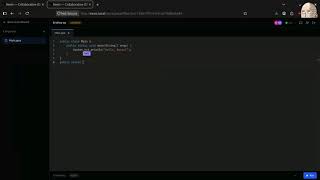
Multiple developers edit the same file simultaneously, see each other's live cursors,
execute code in isolated Docker containers, chat, and replay every keystroke of their session.
Built with 6 Spring Boot microservices, deployed on Kubernetes.
- Demo
- Features
- Architecture
- Service Breakdown
- How Real-Time Editing Works
- Code Execution
- Repository Structure
- Getting Started
- API Reference
- Kubernetes
- Security
- Key Engineering Decisions
|
|
|
| Feature | Description |
|---|---|
| 🔄 Real-Time Collaborative Editing | Conflict-free concurrent editing via Operational Transform with Redisson distributed locks |
| 🖱️ Live Cursor Tracking | Every collaborator's cursor position broadcast in near real-time via Redis pub/sub |
| ⚡ Sandboxed Code Execution | Isolated Docker container per job — CPU, memory, network, and timeout constrained |
| 💬 In-IDE Chat | Real-time messaging via RabbitMQ consistent-hash sharding for ordered delivery |
| 🎬 Session Recording & Playback | Every keystroke stored as events; replayed as a streaming NDJSON response |
| 📁 File Management & Versioning | 3-step MinIO presigned upload with version tracking per file |
| 🔐 Auth (JWT + OAuth2 + RBAC) | Spring Security with refresh token rotation and workspace-level roles |
| ☸️ Kubernetes Deployment | Full K8s manifests — CoreDNS service discovery, persistent volumes, Nginx ingress |
                        ┌─────────────────────────────────┐
                        │         Nginx Ingress            │
                        │    (SSL + path-based routing)    │
                        └──────────────┬──────────────────┘
                                       │
              ┌────────────────────────┼────────────────────────┐
              │                        │                        │
              ▼                        ▼                        ▼
      ┌───────────────┐      ┌──────────────────┐     ┌────────────────┐
      │    Frontend   │      │   API Gateway    │     │   WebSocket    │
      │  React + TS   │      │  :8080           │     │   Service      │
      │  Monaco Editor│      │  Spring Cloud GW │     │   :8082        │
      └───────────────┘      └────────┬─────────┘     └───────┬────────┘
                                      │                        │
                   ┌──────────────────┼──────────────┐         │
                   │                  │              │         │
                   ▼                  ▼              ▼         │
           ┌────────────┐   ┌──────────────┐  ┌──────────┐    │
           │    Auth    │   │   Storage    │  │Execution │    │
           │  Service   │   │   Service    │  │ Service  │    │
           │   :8081    │   │    :8084     │  │  :8083   │    │
           └────────────┘   └──────────────┘  └────┬─────┘    │
                                    │               │         │
                                    ▼               ▼         │
                               ┌────────┐     ┌──────────┐    │
                               │ MinIO  │     │  Docker  │    │
                               │  S3    │     │  Sandbox │    │
                               └────────┘     └──────────┘    │
                                                               │
                                              ┌───────────────┘
                                              │  Redis pub/sub
                                              │  (cross-instance broadcast)
                                              ▼
                                       ┌────────────┐
                                       │  Recording │
                                       │  Service   │
                                       │   :8085    │
                                       └────────────┘

  ━━━━━━━━━━━━━━━━━━━━━━━━━ SHARED INFRASTRUCTURE ━━━━━━━━━━━━━━━━━━━━━━━━━

  PostgreSQL × 4       Redis 7            RabbitMQ 3           MinIO
  ─────────────        ──────────         ──────────────        ─────────────
  auth-db   :5433      Sessions           nexis.code.*          S3-compatible
  exec-db   :5434      OT history         (shard 0/1/2)         Presigned URLs
  storage-db:5435      Pub/Sub            nexis.chat.queue      File versioning
  record-db :5436      Redisson locks     nexis.exec.queue
                                          nexis.result.queue

  ──────────────── Service Discovery: Kubernetes CoreDNS ─────────────────────
| Service | Port | Key Responsibilities |
|---|---|---|
| api-gateway | 8080 | Route all HTTP traffic, validate JWT on every request, rate-limit via Redis, circuit-break with Resilience4j |
| auth-service | 8081 | Signup/Login/OAuth2, JWT issuance & rotation, workspace CRUD, member management, RBAC |
| websocket-service | 8082 | OT engine with Redisson locking, Redis pub/sub for cross-instance broadcast, RabbitMQ code/chat publishing |
| execution-service | 8083 | RabbitMQ consumer, Docker SDK container lifecycle, multi-language execution, result routing |
| storage-service | 8084 | MinIO presigned upload (3-step), file versioning, workspace file listing, Feign-based auth checks |
| recording-service | 8085 | RabbitMQ consumer for code + chat events, PostgreSQL event store, NDJSON streaming playback |
Two users type simultaneously. No conflicts. Here's exactly how:
  User A types "H"                        User B types "W"
  at position 0                           at position 0
        │                                       │
        ▼                                       ▼
   CodeOperation                          CodeOperation
   INSERT pos=0 "H"                       INSERT pos=0 "W"
        │                                       │
        └─────────────┐       ┌─────────────────┘
                      ▼       ▼
                 WebSocket Service
                      │
               Redisson.tryLock()          ← distributed lock per workspace
               OTEngine.transform()        ← adjust conflicting positions
               version++ → Redis           ← server assigns canonical version
               Redisson.unlock()
                      │
               Redis pub/sub publish       ← fan-out to ALL WS instances
                      │
          ┌───────────┴───────────┐
          ▼                       ▼
     Browser A               Browser B
  receives op(W, v2)       receives op(H, v1)
  skips own echo           skips own echo
  applies remote op        applies remote op
          │                       │
          ▼                       ▼
       "HW" ✅                 "HW" ✅
     Consistent              Consistent
The Redisson lock (500ms wait, 5s lease) guarantees operations are serialized per workspace without blocking across workspaces. The OT transform adjusts positions so both users converge to identical document state.
  User clicks ▶ Run
        │
        ▼
  POST /api/execute/run   ──►   Job saved (status: QUEUED)
        │                       Published to nexis.execution.queue
        │
        │  ← HTTP returns immediately with jobId
        │    Frontend shows "running…" in terminal
        │    Result arrives via WebSocket — no polling
        │
        │  (background)
        ▼
  CodeExecutionWorker (RabbitMQ consumer)
        │
        ▼
  Docker SDK creates container:
  ┌─────────────────────────────────────────────────────┐
  │  Image:    python:3.11-slim | openjdk:17-alpine      │
  │            node:18-alpine  | gcc:latest | dart:stable│
  │  CPU:      50% quota                                 │
  │  Memory:   128 MB hard limit                         │
  │  Network:  NONE (fully isolated)                     │
  │  FS:       Read-only except /tmp                     │
  │  Timeout:  30 second watchdog → SIGKILL              │
  └─────────────────────────────────────────────────────┘
        │
        ▼
  stdout + stderr captured → container destroyed
        │
        ▼
  Publish ExecutionResult → nexis.exchange (RabbitMQ)
        │
        ▼
  WebSocket Service consumes → broadcasts to:
  /topic/workspace/{id}/terminal
        │
        ▼
  Terminal panel updates in ALL connected browsers ✅
nexis/
├── api-gateway/              Spring Cloud Gateway
│   └── src/                  JWT filter, rate limiting, circuit breakers, fallback controller
│
├── auth-service/             Spring Boot + Spring Security
│   └── src/                  JWT, OAuth2, workspaces, workspace members, RBAC
│
├── websocket-service/        Spring WebSocket + STOMP
│   └── src/                  OT engine, Redisson locks, Redis pub/sub, RabbitMQ publisher
│
├── execution-service/        Spring Boot + Docker SDK
│   └── src/                  Job queue consumer, container lifecycle, result routing
│
├── storage-service/          Spring Boot + MinIO
│   └── src/                  Presigned upload (3-step), versioning, Feign auth client
│
├── recording-service/        Spring Boot
│   └── src/                  Event consumer, PostgreSQL event store, NDJSON streaming
│
├── nexis-frontend/           React 18 + TypeScript + Vite
│   └── src/
│       ├── pages/            LoginPage, DashboardPage, WorkspacePage
│       ├── components/       CodeEditor (Monaco), Terminal, FileTree,
│       │                     ChatPanel, UserList, Toolbar
│       ├── services/         api.ts (axios + auto-refresh), websocket.ts (STOMP)
│       └── store/            useStore.ts (Zustand)
│
├── k8s/
│   ├── api-gateway.yaml
│   ├── auth-service.yaml
│   ├── execution-service.yaml
│   ├── frontend.yaml
│   ├── ingress.yaml
│   ├── minio.yaml
│   ├── nexis-config-secrets.yaml    ← secrets
│   ├── postgres.yaml
│   ├── rabbitmq.yaml
│   ├── recording-service.yaml
│   ├── redis.yaml
│   ├── storage-service.yaml
│   └── websocket-service.yaml
│
└── docker-compose.yaml       Full local stack
Java 17+          Docker & Docker Compose
Node.js 18+       npm 9+
# For K8s:
Minikube + kubectl
# 1. Clone
git clone https://github.com/krishnaaarwal/nexis.git && cd nexis

# 2. Start infrastructure
docker-compose up -d

# 3. Start services (each in its own terminal)
cd auth-service      && ./mvnw spring-boot:run
cd api-gateway       && ./mvnw spring-boot:run
cd websocket-service && ./mvnw spring-boot:run
cd execution-service && ./mvnw spring-boot:run
cd storage-service   && ./mvnw spring-boot:run
cd recording-service && ./mvnw spring-boot:run

# 4. Start frontend
cd nexis-frontend && npm install && npm run dev

# Open http://localhost:5173minikube start --cpus=4 --memory=8192
minikube addons enable ingress
kubectl apply -f k8s/
kubectl get pods -n nexis -w # wait for all Running
minikube tunnel # exposes LoadBalancer IPs
# Open http://nexis.local| Component | Port | Notes |
|---|---|---|
| API Gateway | 8080 | All HTTP goes here |
| WebSocket Service | 8082 | Direct WS connection (not via gateway) |
| PostgreSQL (auth) | 5433 | |
| PostgreSQL (exec) | 5434 | |
| PostgreSQL (storage) | 5435 | |
| PostgreSQL (recording) | 5436 | |
| Redis | 6379 | Password required |
| RabbitMQ | 5672 | Management UI: 15672 |
| MinIO | 9000 | Console: 9001 |
🔐 Auth · /api/auth
POST   /api/auth/signup              { email, password, fullname }
POST   /api/auth/login               { email, password } → { accessToken, refreshToken }
POST   /api/auth/refresh             { token: refreshToken } → { accessToken, refreshToken }
POST   /api/auth/logout              { refreshToken } + Authorization header
GET    /api/auth/me                  → { id, fullname, email, avatar }
POST   /api/auth/forgot-password     { email } → sends OTP
POST   /api/auth/reset-password      { email, otp, newPassword }
🏢 Workspaces · /api/workspaces
GET    /api/workspaces                           List user's workspaces
POST   /api/workspaces                           Create workspace
GET    /api/workspaces/{id}                      Get workspace by ID
PUT    /api/workspaces/{id}                      Update workspace
GET    /api/workspaces/{id}/members              List members with roles
POST   /api/workspaces/{id}/members?memberId={}  Add member
DELETE /api/workspaces/{id}/members/{userId}     Remove member
PUT    /api/workspaces/{id}/transfer-ownership   Transfer to new owner
📁 Files · /api/files
# 3-step presigned upload:
POST   /api/files/upload               { workspaceId, fileName, size }
                                       → { fileId, url }  ← presigned MinIO URL
# (client PUTs file bytes directly to MinIO URL — backend never touches the bytes)
POST   /api/files/upload-complete      { workspaceId, fileId, versionNum, fileName, sizeBytes }

GET    /api/files/{id}/download        → { url }  ← presigned download URL
GET    /api/files/workspace/{id}       List all files with metadata
⚡ Execution · /api/execute
POST   /api/execute/run               { userId, workspaceId, codeLanguage, code }
                                      → { id (jobId), status: "QUEUED" }
                                      # Result delivered via WebSocket to /topic/workspace/{id}/terminal
POST   /api/execute/kill/{jobId}      Force-kill running container
🎬 Recording · /api/sessions
POST   /api/sessions/start            { workspaceId, participants: [UUID] }
POST   /api/sessions/{id}/end
GET    /api/sessions/{id}             Session metadata
GET    /api/sessions/{id}/events      NDJSON stream → replay every event in order
🔌 WebSocket · ws://host:8082/ws (SockJS + STOMP)
# Connect with JWT in STOMP CONNECT header:
Authorization: Bearer {accessToken}

# Send (client → server):
SEND /app/workspace/{id}/code        CodeOperation  { version, userId, operationType, position, code, length }
SEND /app/workspace/{id}/cursor      CursorPayload  { userId, line, characterIndex }
SEND /app/workspace/{id}/chat        ChatMessage    { userId, workspaceId, time, message }
SEND /app/workspace/{id}/typing      TypingPayload  { userId, isTyping }

# Subscribe (server → client):
/topic/workspace/{id}/code           Remote code operations (already OT-transformed)
/topic/workspace/{id}/cursor         Remote cursor positions
/topic/workspace/{id}/chat           Chat messages
/topic/workspace/{id}/typing         Typing indicators
/topic/workspace/{id}/presence       JOINED / LEFT events (auto-fired by backend)
/topic/workspace/{id}/terminal       Execution results (async, pushed after container exits)
Service discovery uses Kubernetes CoreDNS. Every service resolves others by name within the cluster — no external registry required.
# CoreDNS resolution example
# From storage-service pod:
curl http://auth-service:8081/api/auth/internal/...
# Resolves to auth-service ClusterIP via K8s DNS automatically| Resource | Count | Notes |
|---|---|---|
| Deployments | 7 | 6 services + frontend (2 replicas each) |
| Services | 7 | ClusterIP for internal, LoadBalancer for gateway + frontend |
| ConfigMaps | 1 | DB URLs, Redis host, RabbitMQ host, MinIO endpoint |
| Secrets | 1 | JWT secret, DB passwords, MinIO credentials |
| PersistentVolumeClaims | 4 | One per PostgreSQL instance |
| Ingress | 1 | Nginx — routes by path prefix |
| Concern | Approach |
|---|---|
| API authentication | JWT validated at Gateway — services never receive unauthenticated requests |
| Code execution | Docker: no network, read-only FS, 128MB RAM, 50% CPU cap, 30s kill |
| Credentials | Kubernetes Secrets, never in source code |
| Internal service calls | Direct CoreDNS (bypasses Gateway) — /api/auth/internal/** is permitAll() |
| CORS | Explicit origin whitelist per service |
| Refresh tokens | Single-use rotation — each refresh invalidates the old token |
1. Consistent-Hash RabbitMQ Sharding
Code operations route to one of 3 queues (nexis.code.queue.shard0/1/2) via RabbitMQ's x-consistent-hash exchange, keyed by workspaceId. Operations for the same workspace always land on the same shard — guaranteeing ordered delivery without a single-queue bottleneck.
2. Redisson Distributed OT Locks
Before transforming any incoming operation, the OT engine acquires a per-workspace Redisson lock (tryLock(500ms wait, 5s lease)). This serializes concurrent edits at the server level, ensuring two operations arriving within the same millisecond are transformed correctly rather than corrupting the document.
3. Zero-Polling Execution
POST /api/execute/run returns immediately with a jobId. When the container finishes, the result travels: Execution Service → RabbitMQ → WebSocket Service → /topic/workspace/{id}/terminal → every browser in the workspace. No HTTP polling, no client-side timeouts.
4. NDJSON Streaming Playback
Session replay uses Spring MVC's StreamingResponseBody to stream session events directly from a PostgreSQL cursor (fetch size = 100). The entire session event history never loads into memory — it flows row by row to the client as Newline-Delimited JSON.
5. 3-Step MinIO Presigned Upload
The backend never touches actual file bytes. Step 1 generates a presigned PUT URL. Step 2 is client → MinIO directly. Step 3 notifies the backend to persist metadata. This removes the backend as a bottleneck for large file uploads entirely.
6. Native Kubernetes Service Discovery
Services reference each other by name (http://auth-service:8081) via Kubernetes CoreDNS. No separate service registry to deploy, configure, or scale — the cluster handles it natively.
Krishna Agarwal
3rd Year B.Tech CSE · AKGEC Ghaziabad Backend Developer · GDG on Campus AKGEC


MIT — use freely, credit appreciated.
If this impressed you, consider giving it a ⭐