Ship AI agents to your company. Safely.




You built the agent. Now how do you let the rest of the company use it — without exposing secrets, blowing budgets, or losing control? Agyn is an open-source, Kubernetes-native platform that moves agents from laptops to company infrastructure with the controls enterprises need.
| Problem | Agyn |
|---|---|
| Agents run on individual laptops | Centralized deployment on your infrastructure |
| Secrets passed directly to models | Secrets isolated, never exposed to the model |
| No budget visibility or limits | Spend caps at any level — per agent, per team, per org |
| No access control | RBAC, SSO, audit logs |
| Locked to one vendor | Agent-agnostic, model-agnostic |
| Can't scale | Horizontal scaling, auto-termination on idle |

git clone --branch latest https://github.com/agynio/bootstrap.git
cd bootstrap
./apply.sh
Open the console. Create an org. Deploy your first agent.
Want a ready-made fleet to play with? Apply agynio/demo-agent — a Terraform config that provisions a support, marketing, and data-engineer agent in one command.
For production installs, see Self-host install.
Stop clicking. Version your agent infrastructure.
resource "agyn_agent" "support" {
  organization_id = agyn_organization.acme.id

  name       = "Support"
  nickname   = "support"
  model      = agyn_llm_model.gpt_4o.name
  image      = "ghcr.io/agynio/agent-runtime:v1.0.0"
  init_image = "ghcr.io/agynio/agent-init-codex:v1.0.0"

  idle_timeout = "5m"
  availability = "internal"
}

resource "agyn_agent_mcp" "zendesk" {
  agent_id = agyn_agent.support.id
  name     = "zendesk"
  image    = "ghcr.io/acme/zendesk-mcp:latest"

  envs = [
    {
      name      = "ZENDESK_TOKEN"
      secret_id = agyn_secret.zendesk_token.id
    },
  ]
}
terraform init && terraform applySee the Terraform provider reference for every resource.
Each agent is a first-class citizen:
- Isolated sandbox — own container, filesystem, env vars, secrets
- MCPs in separate containers — full process isolation per tool
- Observability built in — token usage, compute, activity logs
- Auto-scaling — agents spin up on demand, terminate on idle
Full architecture: docs/operate/architecture.md.
| Video | What it shows |
|---|---|
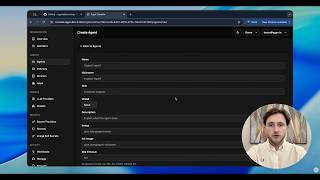 |
Agyn in 5 minutes — From clean cluster to a working agent answering a chat message. End-to-end tour. |
| Coming soon | Deploying agents with Terraform — Define an agent fleet as code, apply it, talk to them. |
| Coming soon | Inspecting a run with Tracing — Every LLM call, every tool execution, every context decision. |
Full docs live in docs/:
- Introduction — what Agyn is, concepts, architecture at a glance.
- Self-host install — bootstrap, production install, upgrades.
- Administer — Console + Terraform for orgs, agents, models, secrets, runners, apps.
- Use — chat, files, tracing, usage, port exposure.
- Build & extend — Gateway API, MCP servers, agent CLIs, apps.
- Operate — networking, identity, scaling, backups, security.
- Reference — glossary, service catalog, schema pointers.
- Troubleshooting — diagnostic playbook by symptom + FAQ.
Agyn is split across focused repositories. The most useful starting points:
| Repo | What it is |
|---|---|
agynio/platform |
This repo. Documentation hub. |
agynio/architecture |
Source-of-truth architecture and product specs. |
agynio/bootstrap |
One-command local install (k3d + Terraform). |
agynio/platform-charts |
Production Helm charts. |
agynio/api |
Protobuf schemas for every service. |
agynio/terraform-provider-agyn |
Terraform provider. |
agynio/agyn-cli |
Platform CLI. |
agynio/console-app · chat-app · tracing-app |
Browser UIs. |
agynio/agent-init-codex · agent-init-claude · agent-init-agn |
Agent CLI init images. |
Full list with descriptions: docs/reference/service-catalog.md.
Good places to start:
- Read the architecture docs to understand the system before touching code.
- Join the Discord for questions while you work.
AGPL-3.0