Five-person ME 439 project at Wichita State University, 2015. Documentation refreshed in 2026.
Our team developed a lightweight kite buggy under a 30 lb weight limit and a $400 parts budget. It also had to fit in a small car and be analyzed for a ten-foot drop case.
I shared the load, stress, deflection, and stability calculations with two teammates. Another teammate created the CATIA model and drawing views from the design dimensions.
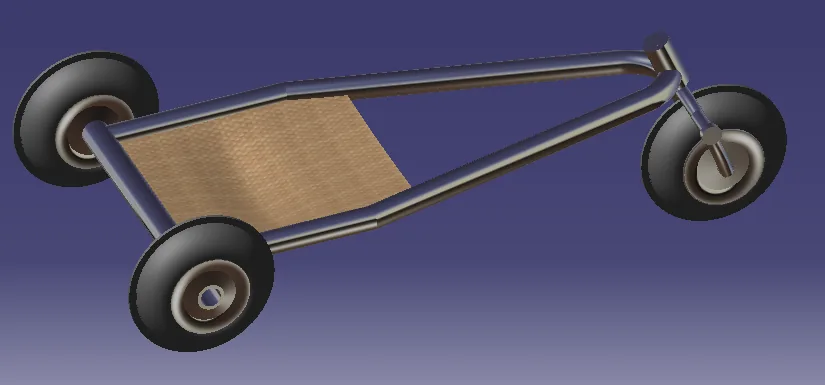
The team report gives a final design weight of 29.7 lb and estimated parts cost of $202.72.
The drop model used a 30 lb buggy, a 180 lb rider, a quarter-second impact, and six inches of seat spring travel. The calculation produced a combined frame load of approximately 3,694 lbf.
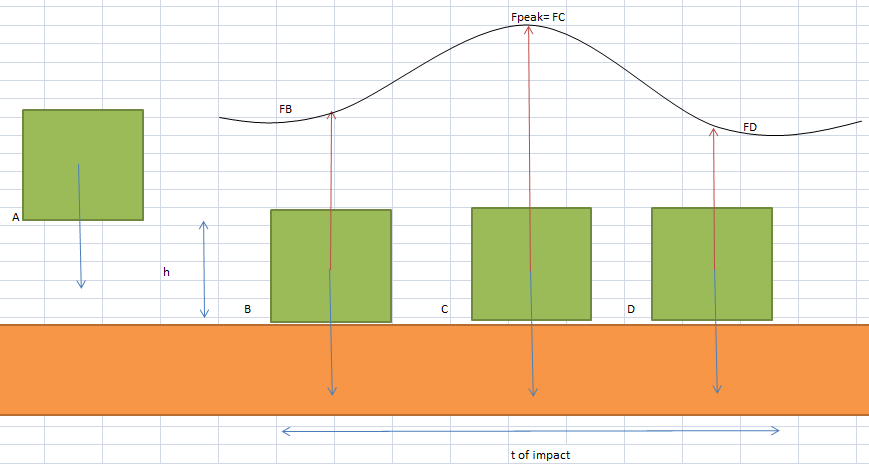
We used the load to check frame dimensions, tube thickness, material, stress, and deflection. The report selected 6061 T451 aluminum tubing with a two-inch outside diameter and a quarter-inch wall.
For the rear axle under the modeled drop load, the report records approximately 1,850 lbf of shear, 9,330 lbf·in of bending moment, and 0.061 in of center deflection. Calculated stress was 17,378 psi against a yield strength of 21,000 psi, giving a design factor of 1.21 for that load case.
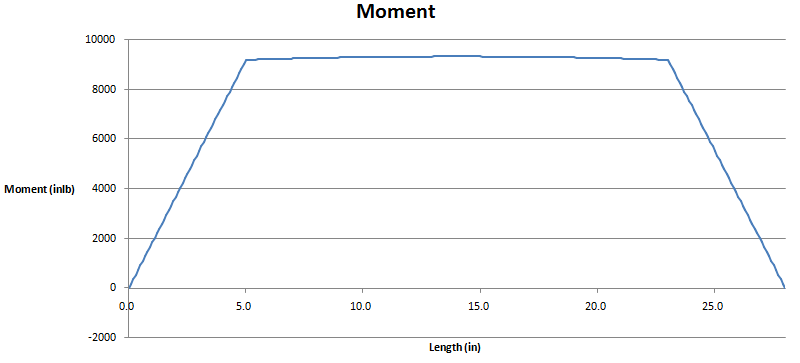
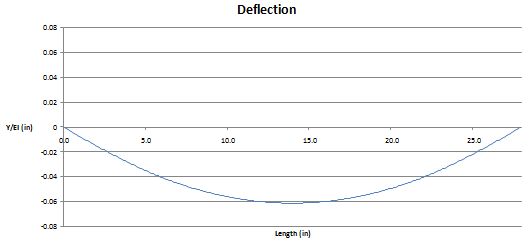
These figures describe the team's calculation model. They do not establish a successful physical drop test.
I worked with two teammates on the impact load, tipping model, material comparison, bending stress, shear, and deflection calculations. We used the results to develop the frame dimensions and material choice.
The CATIA rendering and drawing views are team artifacts produced by another member. My contribution was the shared analysis that informed the design.

