Workflow automation for Litestar with human approval chains, automated pipelines, and web-based workflow management.




Documentation: https://jacobcoffee.github.io/litestar-workflows
Source Code: https://github.com/JacobCoffee/litestar-workflows
litestar-workflows is a flexible, async-first workflow automation framework built specifically for the Litestar ecosystem. It enables you to define complex business processes as code, combining automated steps with human approval checkpoints.
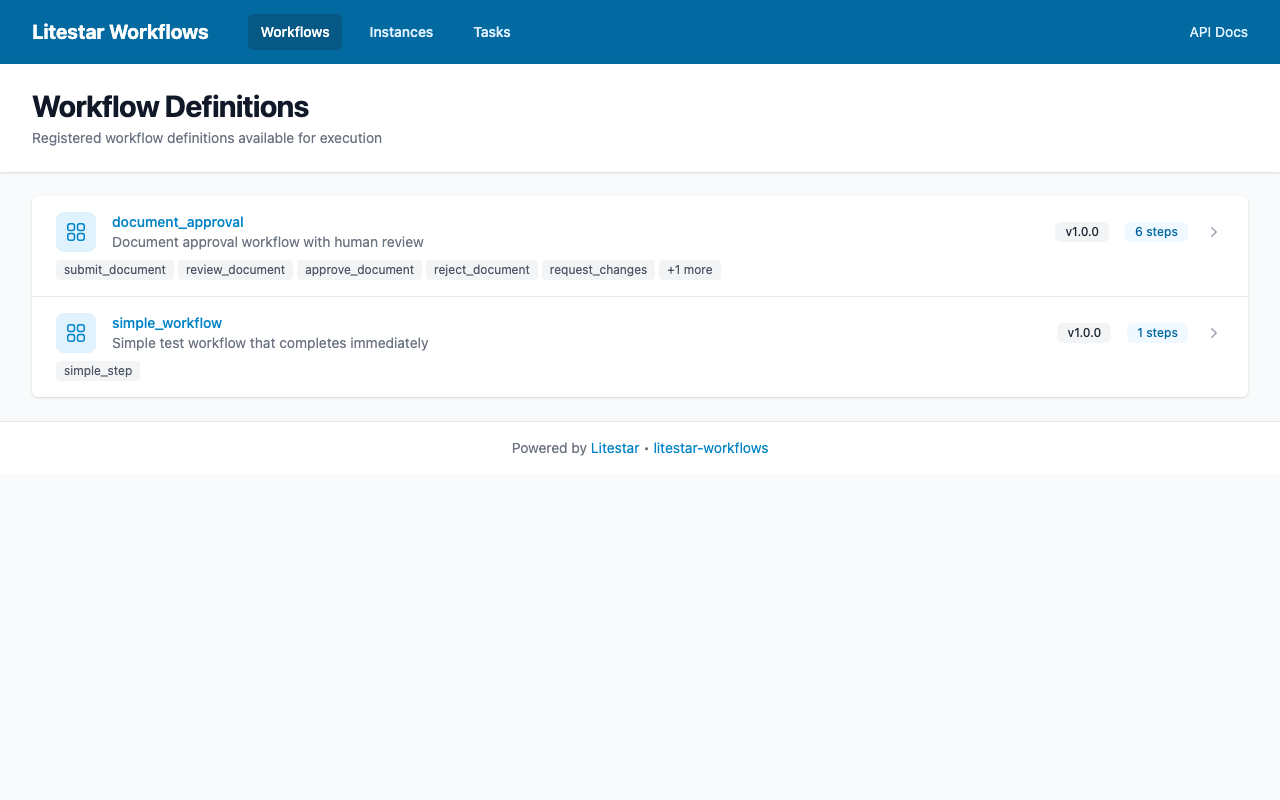
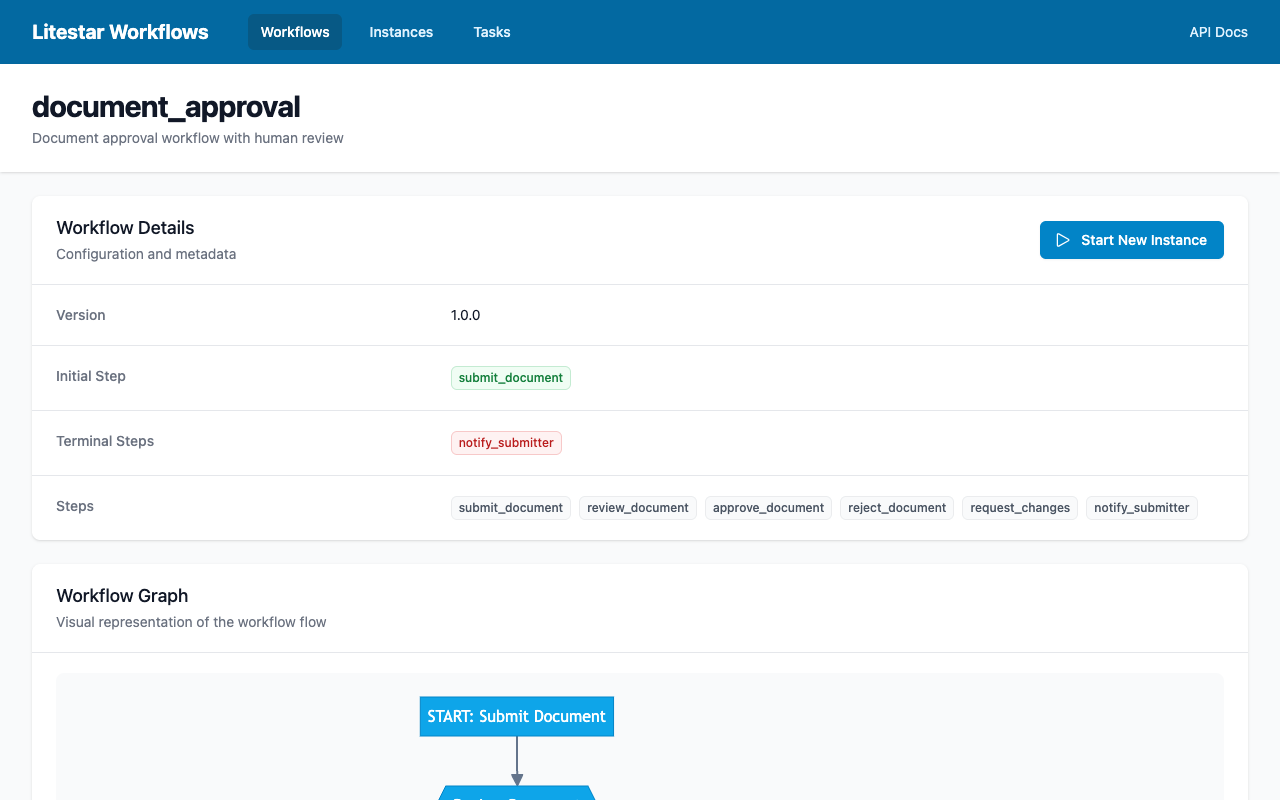
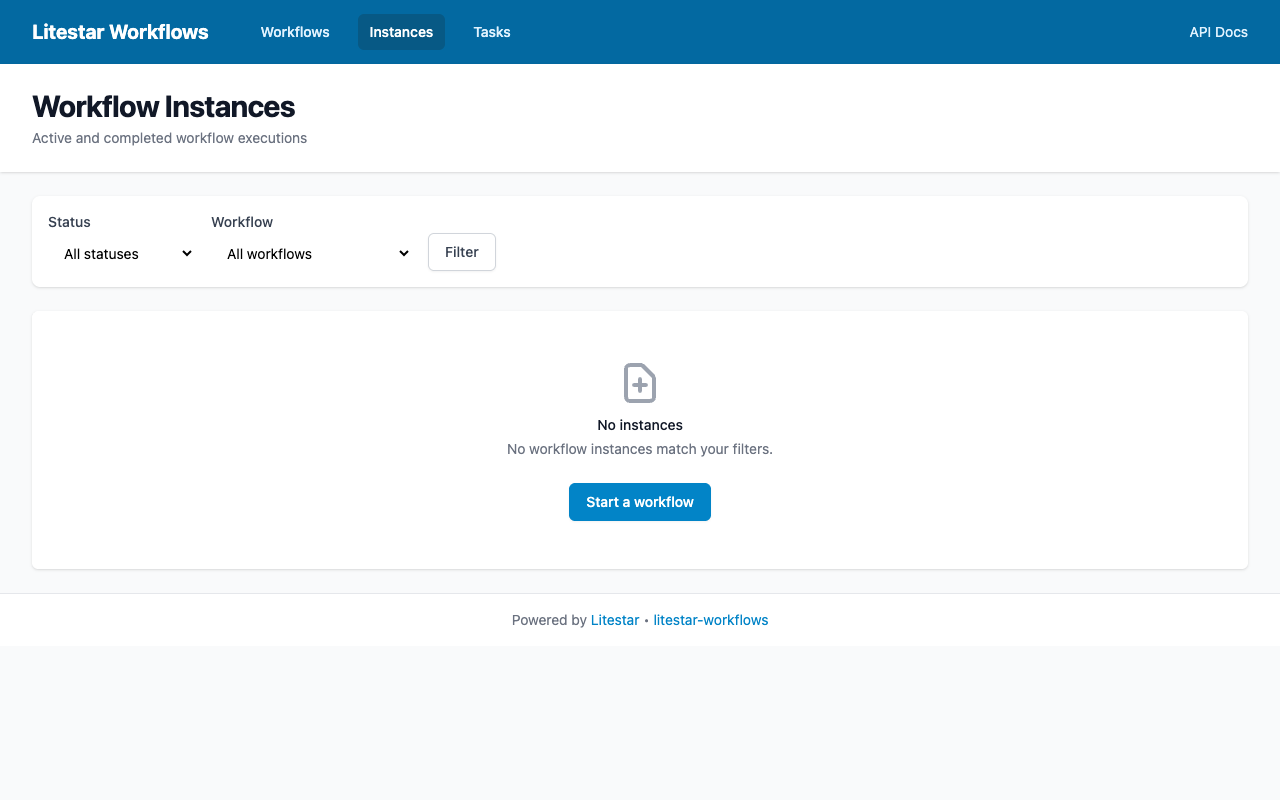
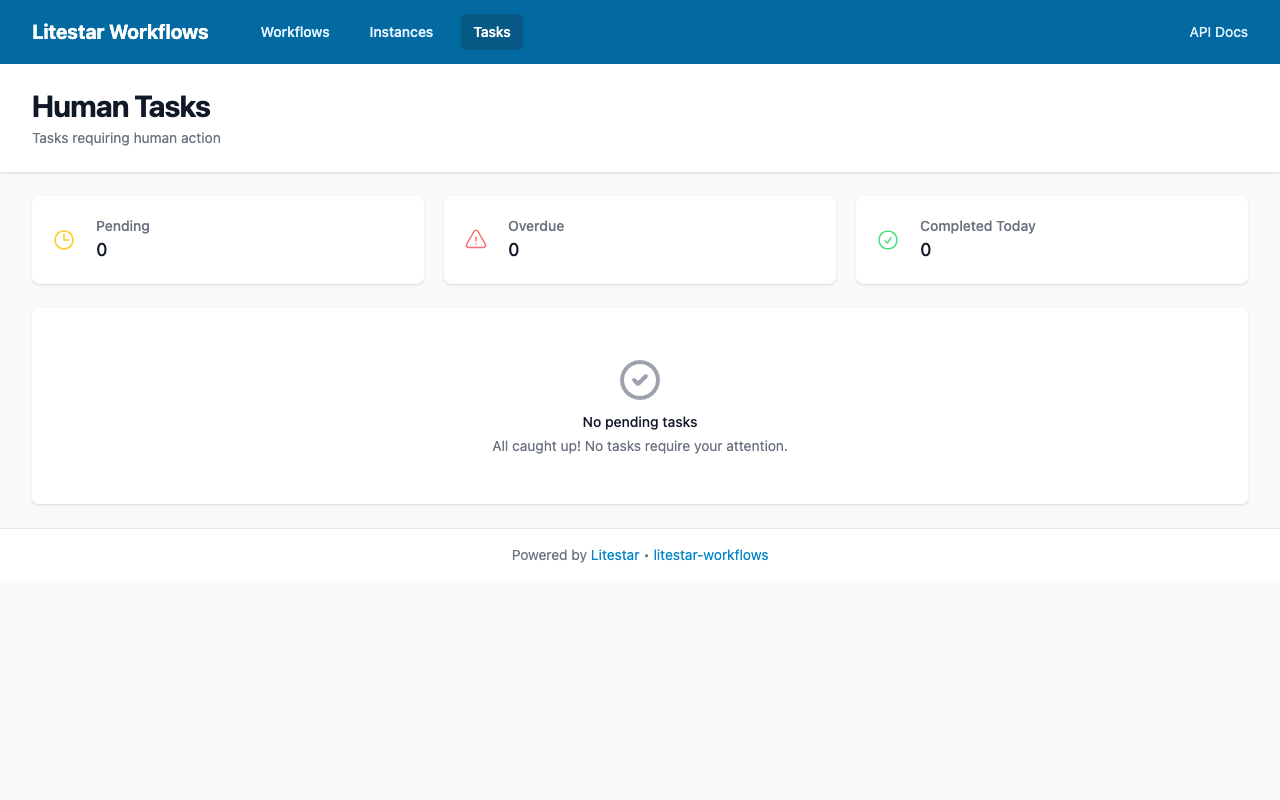
- Async-First Design: Native
async/awaitthroughout, leveraging Litestar's async foundation - Human + Machine Tasks: Combine automated processing with human approval checkpoints
- Composable Workflows: Build complex workflows from simple, reusable primitives
- Type-Safe: Full typing with Protocol-based interfaces for IDE support
- Litestar Integration: Deep integration with Litestar's DI, guards, and plugin system
- Flexible Execution: Local execution engine with optional distributed backends (Celery, SAQ)
- Visual Debugging: MermaidJS workflow visualization support
- Approval Workflows: Expense reports, vacation requests, document reviews
- Multi-Stage Pipelines: Feature releases requiring team, QA, and product approval
- Provisioning Workflows: VM creation, access requests with manager approval
- Content Publishing: Blog posts requiring editorial review before publication
- Any Sequential Process: Anything with an arbitrary series of steps and approvals
Install using pip:
pip install litestar-workflowsOr with optional extras:
# With database persistence (SQLAlchemy)
pip install litestar-workflows[db]

# With web UI templates
pip install litestar-workflows[ui]

# All extras
pip install litestar-workflows[db,ui]Here's a simple approval workflow that demonstrates the core concepts:
from litestar_workflows import (
    WorkflowDefinition,
    Edge,
    BaseMachineStep,
    BaseHumanStep,
    LocalExecutionEngine,
    WorkflowRegistry,
    WorkflowContext,
)


# Define automated steps
class SubmitRequest(BaseMachineStep):
    """Initial submission step - runs automatically."""

    name = "submit"
    description = "Submit a new request for processing"

    async def execute(self, context: WorkflowContext) -> None:
        # Record submission timestamp
        context.set("submitted", True)
        context.set("submitted_by", context.user_id)


# Define human approval steps
class ManagerApproval(BaseHumanStep):
    """Human task - waits for manager input."""

    name = "manager_approval"
    title = "Approve Request"
    description = "Manager reviews and approves or rejects the request"
    form_schema = {
        "type": "object",
        "properties": {
            "approved": {"type": "boolean", "title": "Approve this request?"},
            "comments": {"type": "string", "title": "Comments"},
        },
        "required": ["approved"],
    }


class ProcessRequest(BaseMachineStep):
    """Final processing step - runs after approval."""

    name = "process"
    description = "Process the approved request"

    async def execute(self, context: WorkflowContext) -> None:
        if context.get("approved"):
            context.set("status", "processed")
            # Perform actual processing here
        else:
            context.set("status", "rejected")


# Create workflow definition
definition = WorkflowDefinition(
    name="approval_workflow",
    version="1.0.0",
    description="Simple request approval workflow",
    steps={
        "submit": SubmitRequest(),
        "manager_approval": ManagerApproval(),
        "process": ProcessRequest(),
    },
    edges=[
        Edge("submit", "manager_approval"),
        Edge("manager_approval", "process"),
    ],
    initial_step="submit",
    terminal_steps={"process"},
)

# Register and run
registry = WorkflowRegistry()
registry.register_definition(definition)

engine = LocalExecutionEngine(registry)


# Start a new workflow instance
async def main():
    instance = await engine.start_workflow(
        "approval_workflow",
        initial_data={"request_id": "REQ-001", "amount": 500.00},
    )
    print(f"Workflow started: {instance.id}")
    print(f"Current step: {instance.current_step}")  # "manager_approval"

    # Later, when a manager completes the approval...
    await engine.complete_human_task(
        instance_id=instance.id,
        step_name="manager_approval",
        user_id="manager@example.com",
        data={"approved": True, "comments": "Looks good!"},
)For comprehensive documentation, tutorials, and API reference, visit: https://jacobcoffee.github.io/litestar-workflows
This project uses Semantic Versioning.
- Major versions introduce breaking changes
- Major versions support the currently supported version(s) of Litestar
- See the Litestar Versioning Policy for details
Contributions are welcome! Please see CONTRIBUTING.rst for guidelines.
# Clone the repository
git clone https://github.com/JacobCoffee/litestar-workflows.git
cd litestar-workflows

# Install with development dependencies
pip install -e ".[dev-lint,dev-test]"

# Run tests
pytest tests

# Run linting
pre-commit run --all-filesThis project is licensed under the MIT License. See LICENSE for details.
This library draws inspiration from:
- Joeflow - Human/machine task model and lean automation philosophy
- Prefect - Dynamic execution and event-driven patterns
- Celery Canvas - Composable task primitives