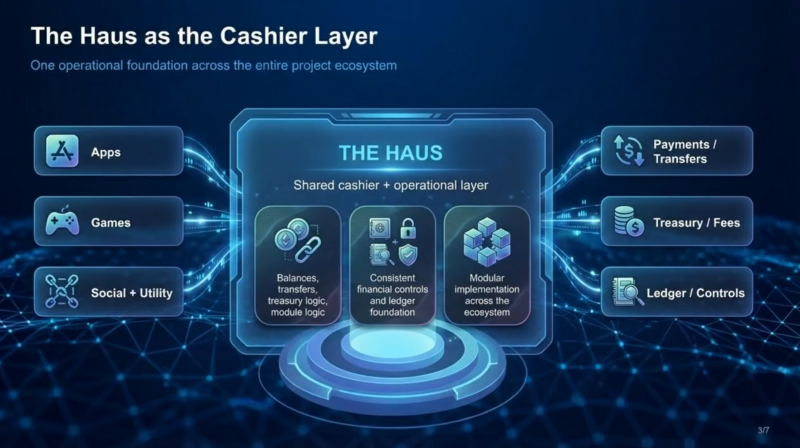
A modular cashier, balance, and spend system for Avalanche applications, games, and social platforms.
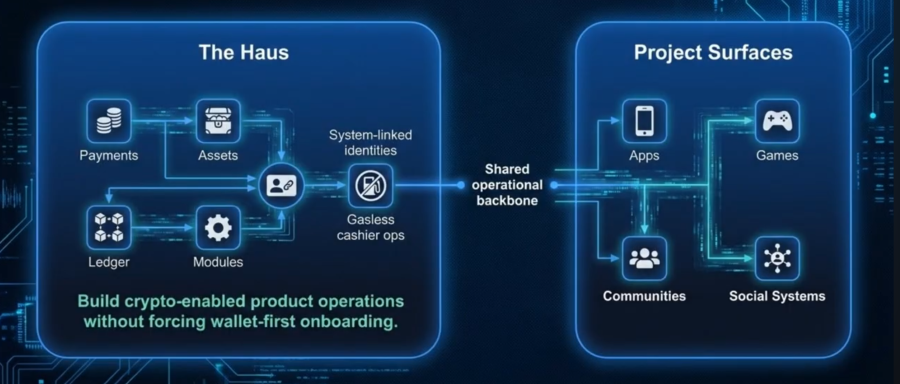
The Haus Cashier is a wallet-connected infrastructure layer built to make Avalanche applications easier to use, easier to monetize, and easier to extend. It provides a reusable balance and settlement system that lets developers move beyond one-wallet-transaction-per-action design and build smoother user experiences for games, apps, communities, and social integrations.
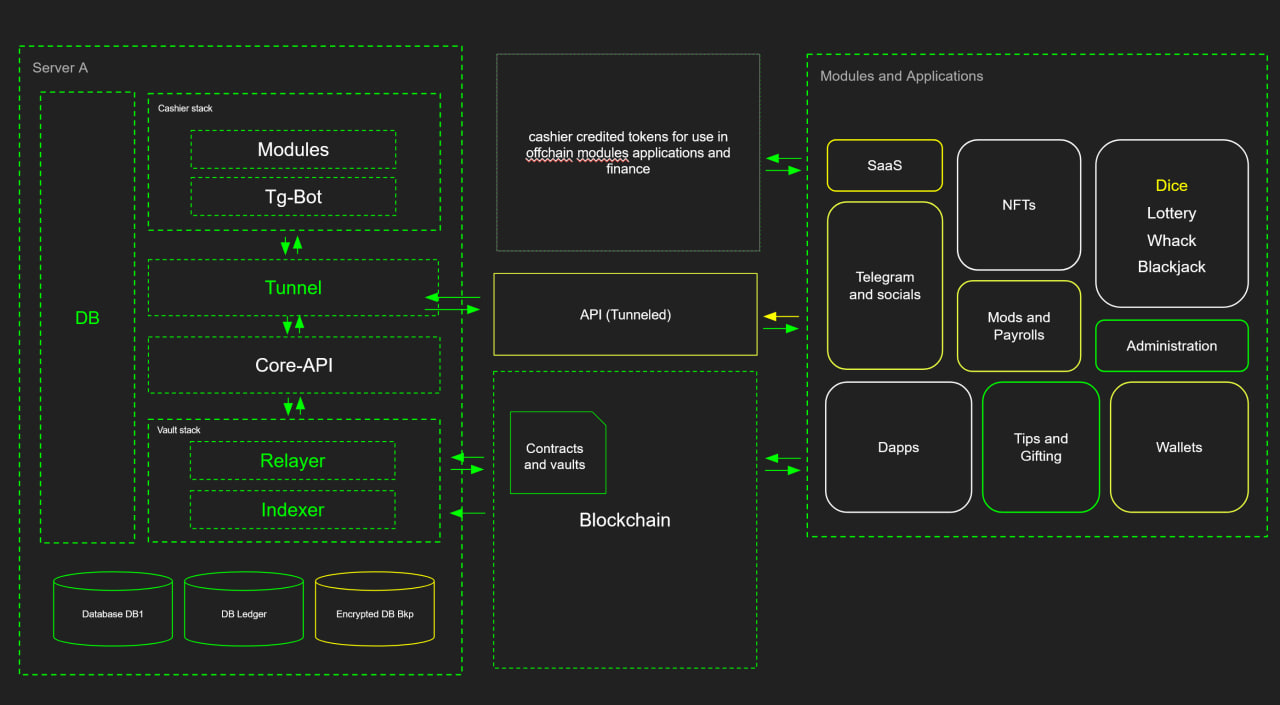
This MVP demonstrates The Haus Cashier on Avalanche Fuji through a working web application, a balance-backed dice game demo, and an optional Telegram integration layer that shows how the same cashier system can also power social accounts, bot notifications, credited spending, administration tools, and community-facing features.
The core idea is simple:
bring wallet-backed value into a structured cashier system, then let applications and integrations use that value through cleaner user flows.
-
Webpage: The Haus Web Page
-
Live Dapp: The Haus Fuji MVP
-
Signed wallet session demonstration Dice Demo: SIWE Spend w/out tx Dice Game Demo
-
Google Auth session demonstration Dice Demo: Google Auth Spend w/out tx Dice Game Demo
-
Telegram Bot Cashier Spend Demonstration: @TheHausAvaxFujiMvpBot
-
Telegram Community Group: Join Telegram Group
-
Round 2 MVP Video Presentation: https://youtu.be/XhCs-H9twhQ?si=OQl6ZWc62XvYSLFx
-
Round 1 Presentation Video: https://www.youtube.com/watch?v=8u3g21UKsr0
-
Vault Contract (Routescan): https://testnet.routescan.io/address/0x49D0c30A6C48A1dB80eFf65ffF0083A389a94dab/contract/43113/code
-
Vault Transactions + Contract (Testnet Snowscan): 0x49d0c30a6c48a1db80eff65fff0083a389a94dab
-
Raw API Docs openapi.json
The Haus Cashier is designed as a modular balance and interaction system for user-facing web3 applications.
Instead of forcing users to sign a full wallet transaction for every repeated action, The Haus introduces a structured cashier model where users can:
- connect a wallet
- fund into a supported flow
- hold application-usable balances
- authorize actions through signing
- spend from credited balance inside applications
- receive rewards, wins, or payouts back into that balance
- withdraw when needed
This is especially useful for:
- games
- digital experiences
- leaderboards and tournaments
- community reward systems
- social bot integrations
- tipping and gifting
- monetized web apps
- modular SaaS-style tools
For this MVP, the primary demonstration is a wallet-first playable web app flow on Avalanche Fuji. A secondary demonstration is the Telegram integration, which shows how the same cashier system can extend into social and community environments without changing the underlying value model.
This submission is focused on proving that The Haus Cashier can serve as reusable infrastructure for multiple application types.
The MVP demonstrates:
- a live dapp on Avalanche Fuji
- wallet-connected user access
- a credited-balance gameplay flow
- web3 signing for user interaction
- balance-backed spend and settlement
- modular architecture behind the frontend
- social platform integration through Telegram
- bot-based notifications and account-linked interaction
- administrative system interaction outside of only direct dapp usage
This is not being presented as just a game.
It is being presented as a cashier layer for applications, with the dice page and Telegram bot serving as proof-of-implementation examples.
The Haus Cashier is not limited to one frontend, one game, or one social app.
It is a reusable system that can sit between:
- wallet-backed user funds
- application-facing balances
- gameplay and reward logic
- social account usage
- administrative and operational tools
- future SDK or integration layers
That makes it useful for builders who want to create web3 applications without redesigning deposits, balances, spend logic, rewards, withdrawals, and notifications from scratch every time.
The main review path for judges is the web dapp experience.
- Live Dapp: The Haus Fuji MVP
- Dice Demo: Dice Game Demo
- The user opens the dapp.
- The user connects a wallet on Avalanche Fuji.
- The user funds into the cashier-supported flow.
- The user gains an application-usable balance.
- The user visits the dice page.
- The user authorizes interaction through web3 signing.
- The user plays using credited cashier balance.
- Wins and losses settle against that balance.
- The user can withdraw when needed.
This is important because it shows how web3 games and interactive applications can feel more usable while still remaining wallet-rooted and Avalanche-connected.
Avalanche is a strong fit for The Haus Cashier because it enables responsive user-facing applications that still retain real web3 value flow and contract-connected logic.
This MVP is built on Avalanche Fuji to demonstrate:
- live wallet-connected usage
- testable web3 application flow
- support for onchain-backed balances and logic
- a credible path from funding to application usage to withdrawal
The Haus is meant to support practical user-facing products, and Avalanche provides an environment where those products can feel fast enough and usable enough to matter.
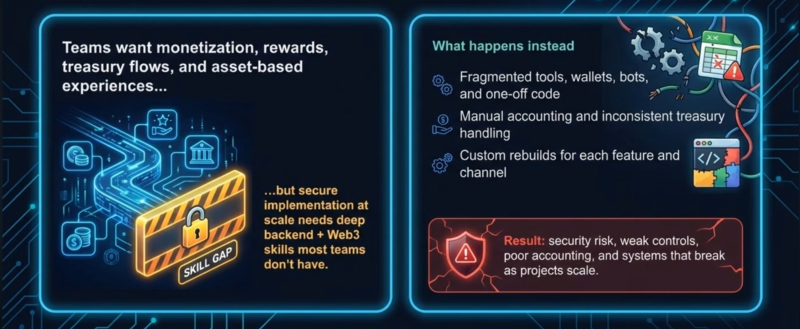
Many web3 products still break user experience by treating every interaction as a direct wallet transaction.
That is acceptable for occasional high-value actions, but it becomes a major problem for applications that need repeated user input and fast feedback, including:
- browser-based games
- mini-game hubs
- social spending systems
- community reward mechanics
- leaderboards
- ticketed participation flows
- chat-based interactions
- balance-aware user tools
If every action requires a new transaction prompt, users drop off quickly and the product stops feeling like a real application.
Developers need a way to preserve wallet-backed value and onchain trust while also creating a smoother interaction layer for repeated app usage.
That is the role of The Haus Cashier.
The Haus Cashier acts as a reusable application-layer system for:
- wallet-connected deposits
- credited balances
- signature-based user authorization
- balance-backed spending
- rewards and payouts
- withdrawals
- ledger-aware tracking
- modular integrations across web apps and social platforms
This allows developers to build applications where the user still begins from wallet ownership and web3 verification, but the app experience can operate more like a practical product and less like a series of friction-heavy transaction popups.
In this MVP, that solution is demonstrated in two ways:
A wallet-first dapp experience where users can connect, fund, use credited balances, play, and withdraw.
A Telegram bot integration showing that the same cashier system can also power account linking, notifications, balances, administrative functions, and balance-backed interactions on a social platform.