After the Lookback write-up, people kept asking what's next on the token diet. This is it — and it's my favorite kind of win. Not a cheaper model. Not a smaller prompt. Just a different place to put the data.
Fair warning, same as last time: i cannot stop saving tokens askjdhsajkdha. This is another one.
If you read the lookback piece you already know the song: every turn, your agent re-sends its entire context to the API. Now watch what happens when the agent explores your disk. It runs a recursive scan. A hundred thousand file paths come back. That dump lands in the conversation — and from that moment, you re-send a hundred thousand paths every single turn for the rest of the session.
You're not paying to search once. You're paying to re-read the search forever.
The usual answer is "truncate the output." But truncation just means the agent loses the data and has to scan again the next time it needs it. Re-scan or re-send — pick your bill. Both are the wrong bill.
What if the agent had memory that wasn't the conversation?
A live Python console whose variables persist between calls. Scan once into a variable — it stays alive. Next turn, filter it. The turn after, aggregate it. The data never re-enters the chat. It lives in the interpreter's heap, off to the side, and the model only ever prints the small slice it actually needs.
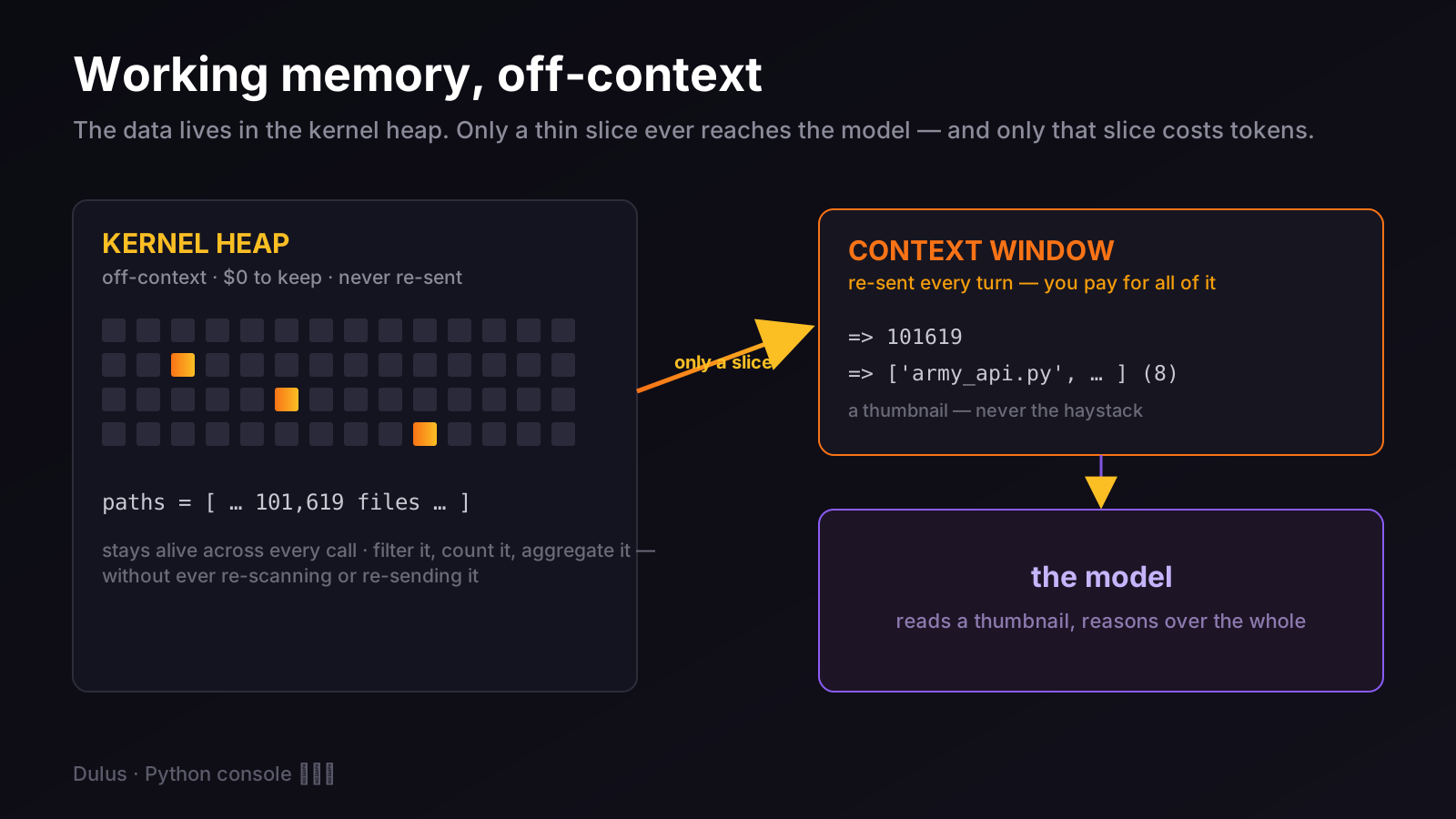
Full honesty on where this came from: it started as one line — "imagine the model had a live Python console, searching recursively." I went and built it the same day.
Every other "code interpreter" tool runs one-shot: send code, get output, output goes into the context, done. The output is the product — and the output costs tokens, forever, every replayed turn.
The persistent kernel flips it. The data is the product, and the data never touches the context. You pay for the question and the slice — never the haystack. It's working memory outside the context window: the context stays flat while the data grows.
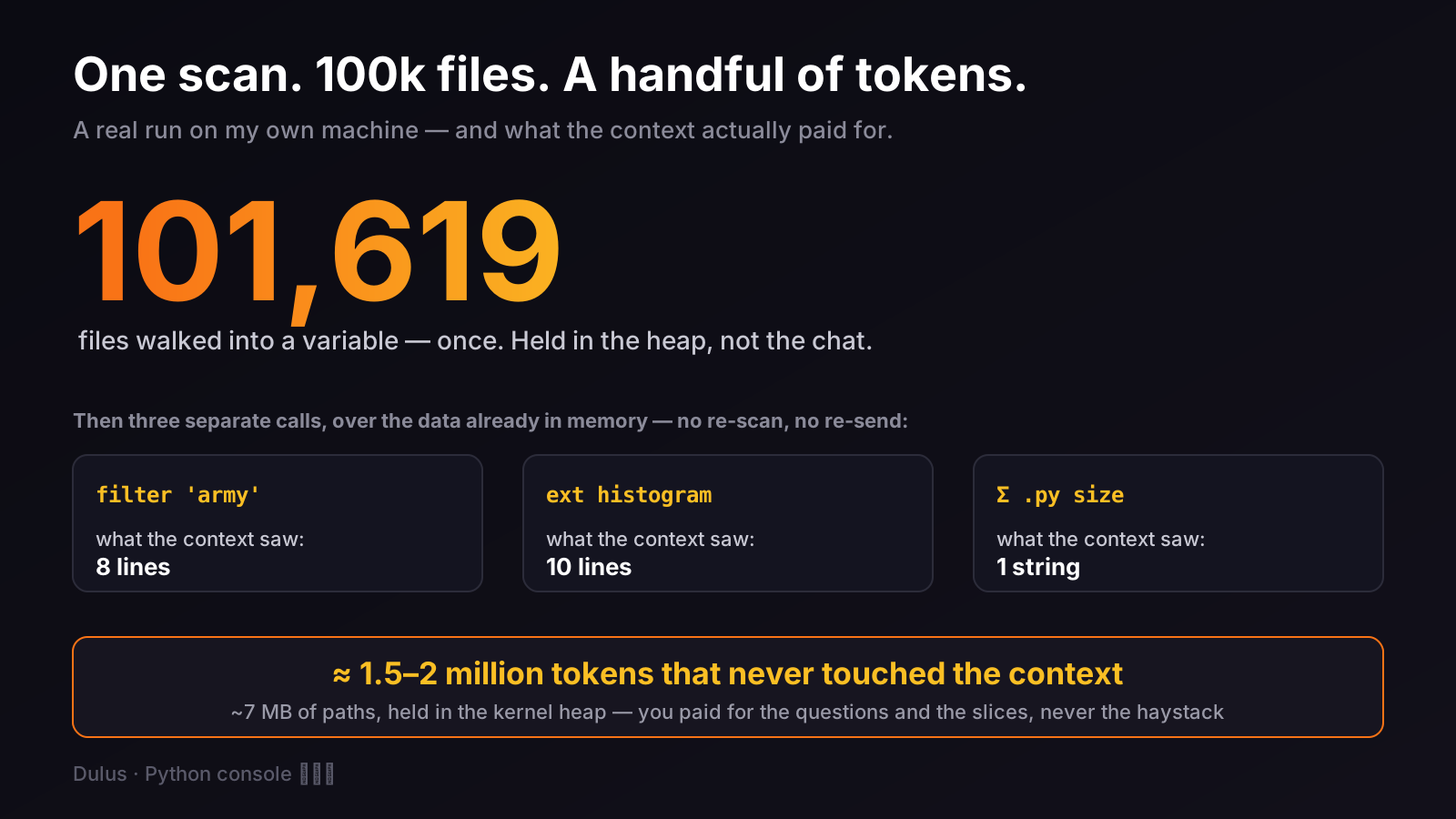
One real run on my own machine. I pointed it at a project folder and let it scan.
- 101,619 files walked into a variable. What the context saw: the number
101619. - Then three separate calls, each on the data already in memory — no re-scan, no re-send:
- filter for one keyword → 8 lines
- a histogram of every file extension → 10 lines
- total size of the
.pyfiles → one string
Three questions answered over a hundred thousand records, and the context never held more than a thumbnail. Those 101,619 paths — roughly 7 MB of text, call it 1.5–2 million tokens if you'd dumped them — simply never happened.
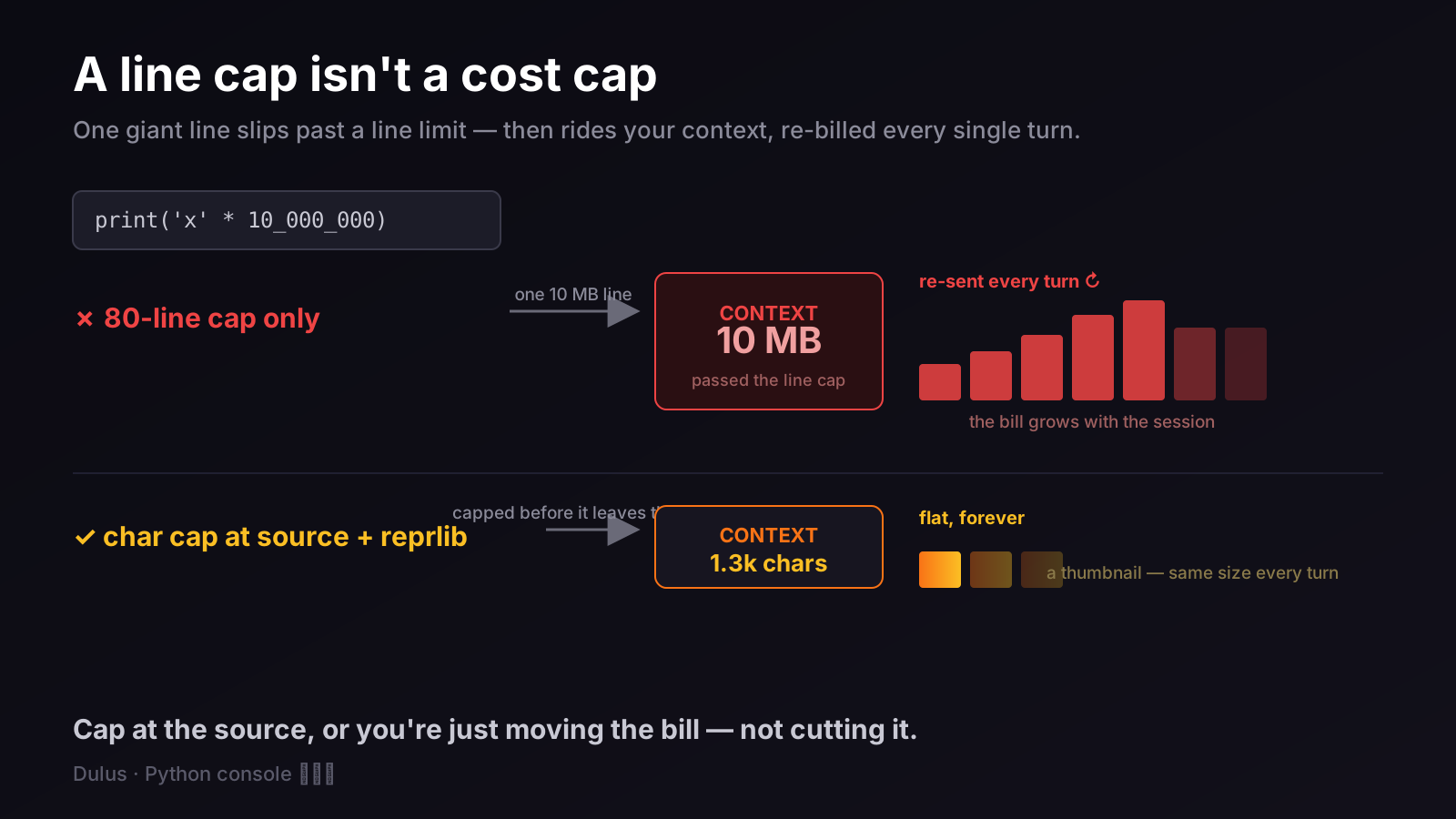
Here's the trap, and it's the exact lesson lookback beat into me. My first cut capped the output at 80 lines. Felt safe. It wasn't.
A line cap does nothing against one enormous line. print('x' * 10_000_000), or the repr of a million-element list — that single monster sails right past a line cap, lands in the context, and because context is re-sent every turn, you pay for it again on every call for the rest of the session. The precise bill a big Edit diff used to rack up.
So the fix isn't a line cap. It's a character cap at the source — before the data ever leaves the kernel — plus a bounded repr so echoing a huge object shows its shape, never its whole body. 10 MB print → 1.3k characters. Million-element list → under a thousand. The haystack stays in the heap; only a thumbnail crosses over.
Restated, because it keeps being true: a token optimization that ignores the re-send is just moving the bill, not cutting it. Cap at the source, or don't bother.
It runs in an isolated subprocess kernel, not in-process — on purpose. The model writes arbitrary code in loops, and an infinite loop or a crash should cost you a kernel, never your agent. The parent enforces a wall-clock timeout; a runaway cell gets killed (its state forfeit — that's the price of an infinite loop) and the next call spins up a fresh kernel on its own. input() can't hang it. A stray background thread can't corrupt it. Two sub-agents can hit it at once. Bulletproof was the requirement, not the bonus.
I'm going to say it, because I'm tired of not saying it: we did this first.
Not a lab. Not a research team. One builder in the Dominican Republic and his agent, on a random Tuesday, turning "imagine the model had a live console" into a shipped, hardened, cache-safe feature the same day. If a persistent, off-context REPL shows up in someone else's agent next quarter — good, it's a great idea, I already know. But you read it here first, and I'm putting a date on it on purpose.
Credit is cheap. Pay it. 🦅🇩🇴
Run it yourself → pip install dulus · dulus.ai
Rather not babysit infra? Hosted agents + dashboard, zero setup → dulus.online
Same brain either way. 🦅🇩🇴